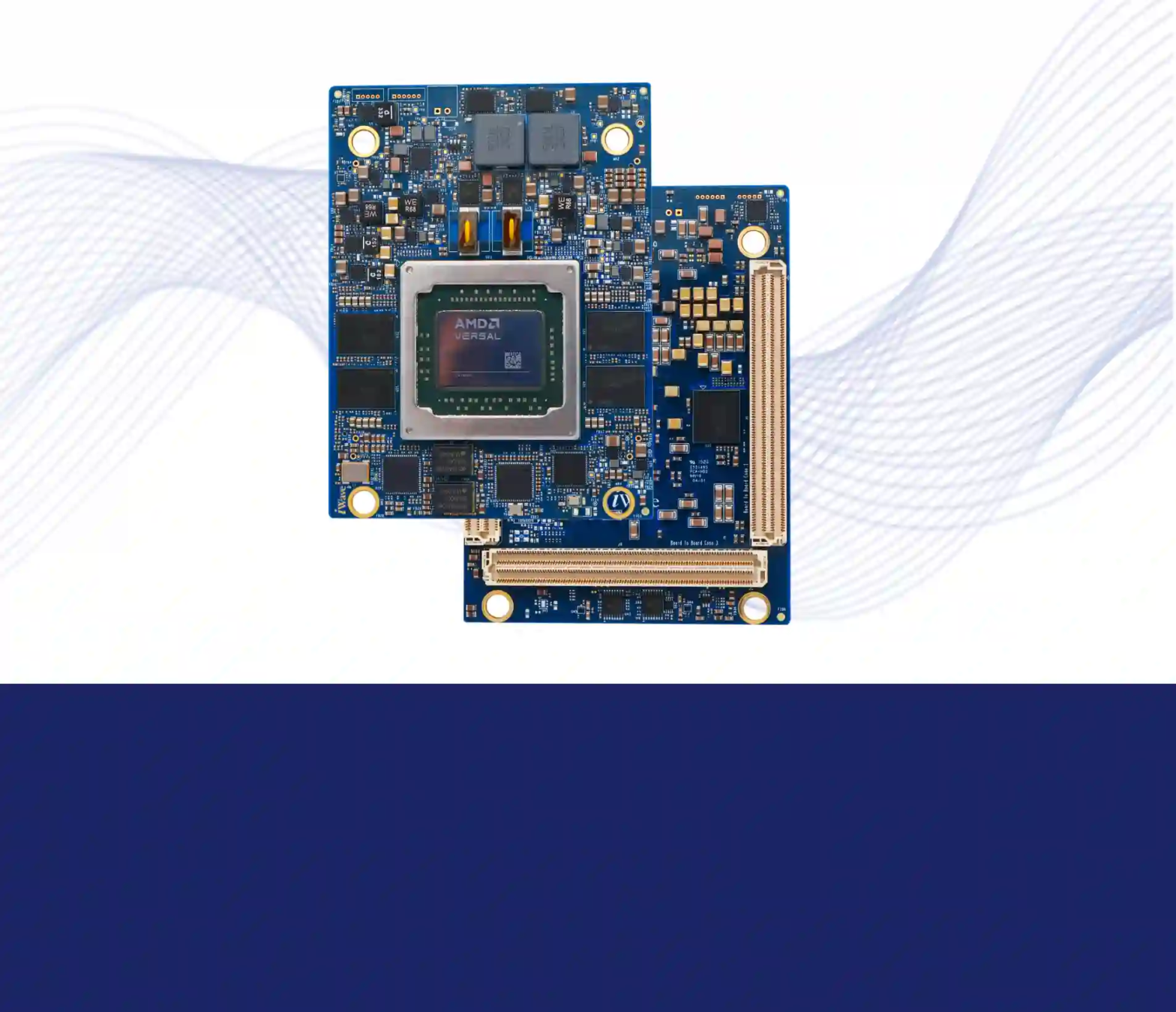
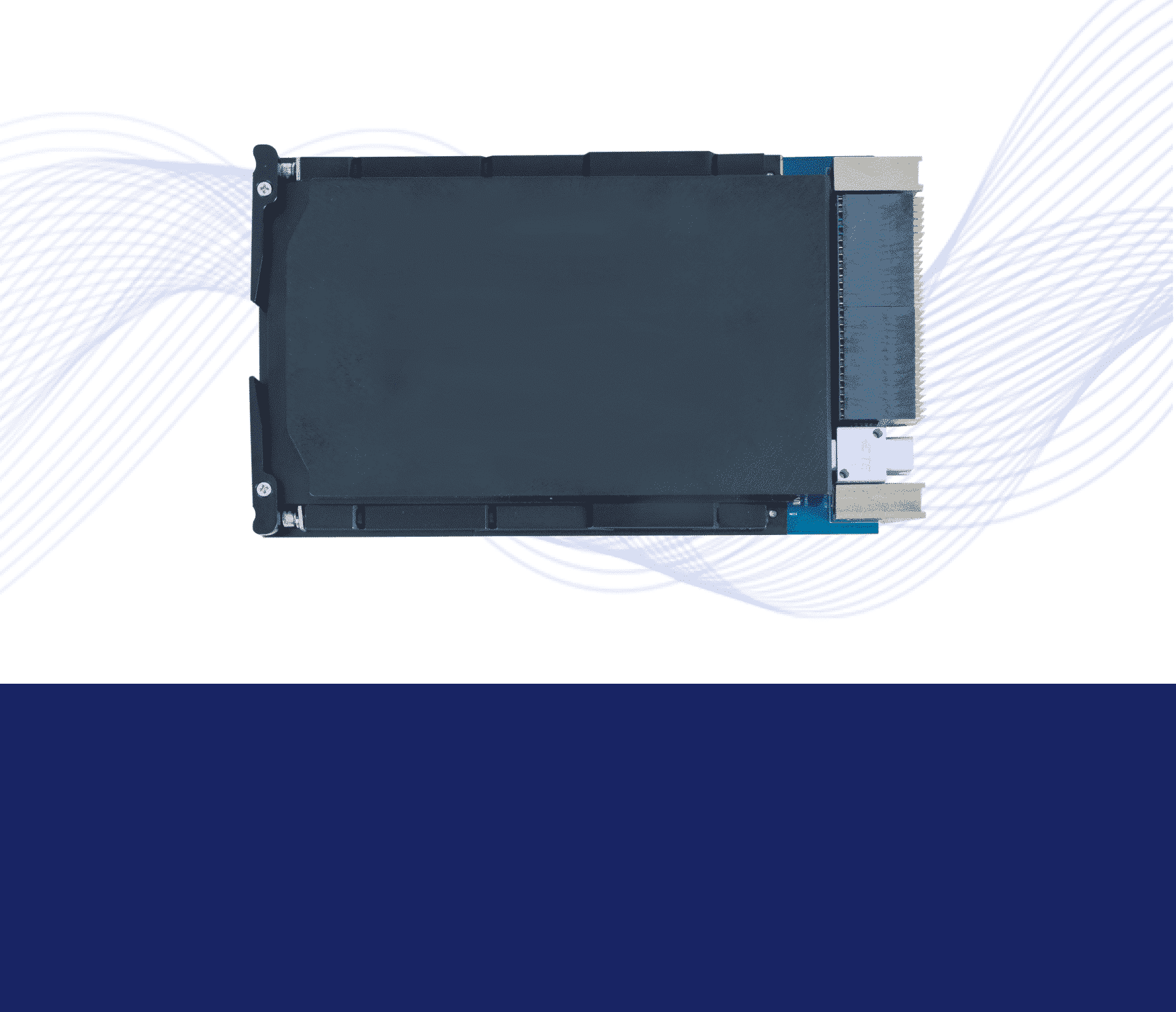
Versal™ Premium Gen2 System on Module
iG-G86M®
- Versal™ Premium Gen2 SoC with VSVC3340 package
- Compatible with 2VP3602, 2VP3502, 2VP3402 Devices
- Up to 3.3M Logic cells and 1.5M LUTs
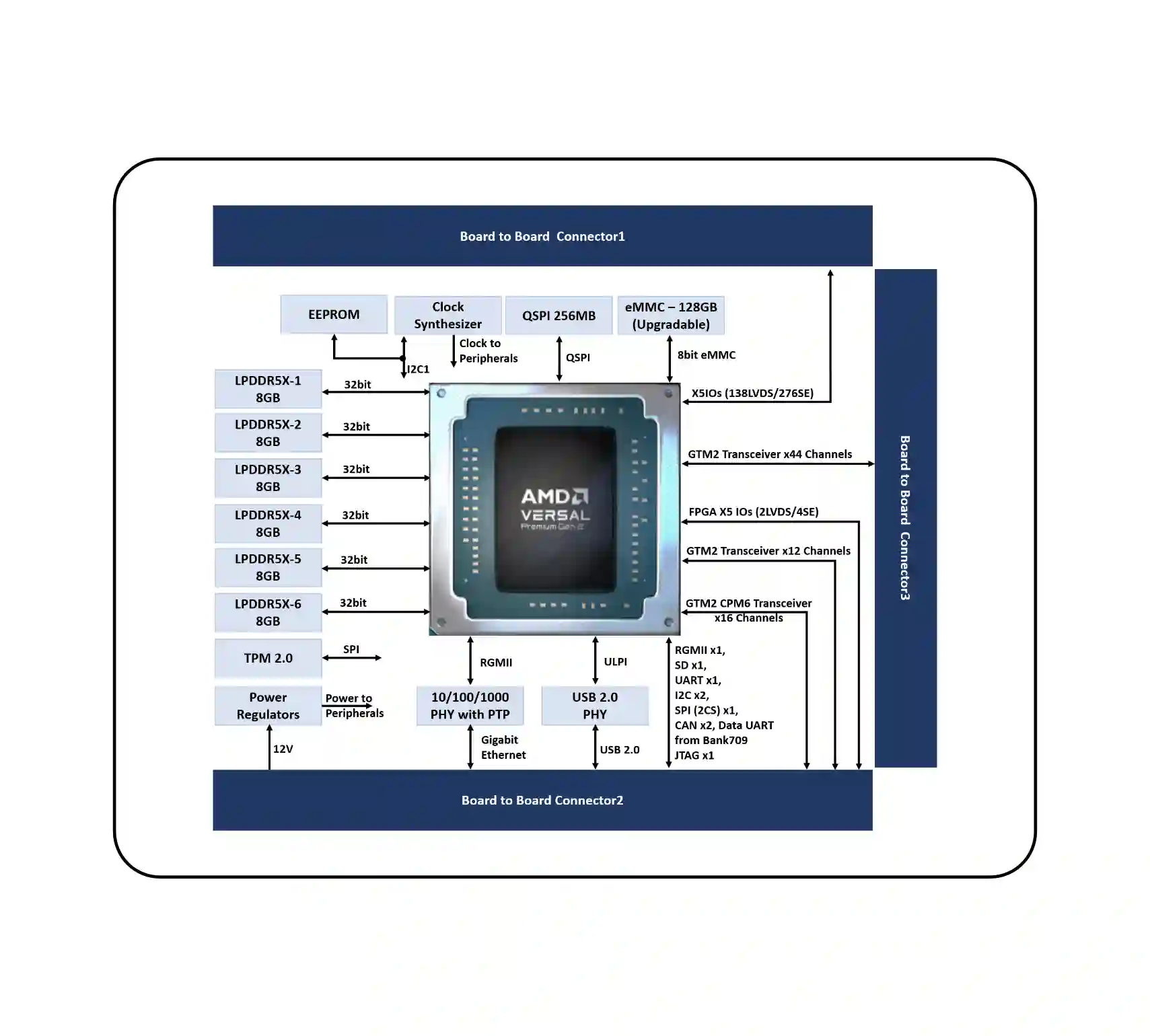
- Six 32bit, 8GB LPDDR5x Memory
- 56 Channels of GTM2 Transceiver up to 112Gbps PAM4
- 16 Channels of GTM2 LPD transceivers for PCIe Gen6
- Up to 140LVDS/280SE from X5IOs


Documents
| Features | Details |
|---|---|
| SoC | Compatible with 2VP3602, 2VP3502 and 2VP3402 Devices Dual-core Arm Cortex-A72 @1.7GHz Dual-core Arm Cortex-R5F @800MHz Up to 3.3M Logic cells and 1.5M LUTs |
| Memory | Six 32bit, 8GB LPDDR5x 32Kb EEPROM |
| Storage | 256MB QSPI flash 128GB eMMC Flash (Upgradable) |
| Board to Board Connector Interfaces | From PL Block:
From PS Block:
|
| Other On SoM Features | TPM2.0 module 10/100/1000 Ethernet PHY with PTP USB Transceiver PHY Programmable Clock Synthesizer Fan Header |
| Software Features | EDF BSP with Vivado hardware support Linux driver support for PL and DMA subsystems Network & DMA Driver Stacks High-Speed I/O stack supporting 112G PAM4 transceivers, 400G Ethernet, and PCIe Gen6 interfaces Bare-metal and real-time low-latency application support Vitis development environment for acceleration |
| General Features | Power Input: 12V through B2B Connector Form Factor: 115mm x 82mm (BRYNc+) BSP Support: 2025.2 Yocto-based AMD EDF Flow Operating Temperature: -40°C to +85°C Environment Specification: REACH & RoHS3 Compliant |

- Dual Stacked QSFP112G Connector for 100G/400G/600G Ethernet interfaces
- Dual FMC+ HSPC Connector with high-speed transceivers and high-performance PL IOs
- FMC+ HSPC connector with high-performance and high-density PL IOs
- PCIe x16 Connector for CPM6 PCIe Gen5/Gen6 x8 Interface
- 12G SDI Video IN through HD BNC Connector
- 12G SDI Video OUT through HD BNC Connector
- 4K HDMI 2.0 IN through HDMI Connector
- 4K HDMI 2.0 OUT through HDMI Connector
- PMOD Connector for PL IOs
- USB TypeC for debug and JTAG interfaces
- USB 2.0 OTG through TypeC Connector
- Dual Gigabit Ethernet through RJ45 Magjack
- Micro SD connector for booting and storage
- Coin cell battery connector for RTC backup power
- Boot media controlling DIP switch and Hard Reset Switch
- GPIO Header for PS and PL IOs
- Operating Temperature: -20°C to +70°C
- Form Factor: 210mm x 160mm




FAQs
The AMD Versal™ Adaptive SoC is a next-generation adaptive computing platform that combines CPUs, programmable logic (FPGA), AI engines, DSP engines, and high-bandwidth networking on a single device.
Unlike traditional SoCs or FPGAs, Versal™ devices integrate multiple compute engines connected through a high-speed Network-on-Chip (NoC). This architecture allows developers to run AI, signal processing, and embedded applications efficiently in a single platform.
Yes. Versal™ AI Edge devices integrate AI engines and programmable logic to accelerate machine learning inference, vision processing, and real-time analytics. This makes them ideal for edge AI applications where low latency and high performance are required.
Versal™ SoM platforms support multiple high-speed interfaces including PCIe Gen4 and Gen5, Ethernet connectivity, and multi-gigabit transceivers that can reach speeds up to 112 Gbps depending on the device family.
Yes. With support for high-speed transceivers, PCIe Gen5, and MAC interfaces up to 600G, Versal™ SOM platforms are well suited for networking, data processing, and communication infrastructure applications.
Versal™ devices are more advanced than traditional FPGAs because they combine multiple processing engines in a single platform. They integrate CPUs, programmable logic, AI engines, and DSP blocks to handle different types of workloads efficiently.
Key benefits include:
- Heterogeneous compute architecture for flexible processing
- Software-programmable acceleration for faster development
- High-bandwidth and deterministic data movement
- Integrated high-speed transceivers for multi-gigabit connectivity
- Scalable platform for AI, networking, and embedded applications